What Is Yield Farming, Liquidity Mining, And Staking?
Content
- My Personal Liquidity Mining Experience
- Terminology In Defi Explained:
- What Are The Advantages And Disadvantages Of Liquidity Mining?
- Definition Of Liquidity Mining
- Benefits Of Liquidity Mining
- The Oecd Presents The G20 With A New Crypto Transparency Framework
- Liquidity Mining Vs Other Passive Investment Strategies
To summarize, the higher the liquidity, the lower the spread, the faster the orders are executed, and the less likely they are to slip.
- In order to be chosen by the protocol, the validators must stake large amounts of coins.
- Liquidity mining is the process of locking your assets in specific pools in DeFi platforms and earn rewards from trading fees.
- The above calculation examples are intended as an idealized illustration.
- Security hacks can lead to losses due to theft of tokens held within the liquidity pools or a fall in token price following the negative publicity.
- One of the most popular applications of blockchain technology is decentralized finance , and a popular way for crypto investors to participate in DeFi is to mine for liquidity.
In other words, even the largest platforms have low-liquidity pairs. Understanding the liquidity mining mechanism is important to understand what liquidity is and how it works. Liquidity is a set of all trading offers with exchanges and brokers. That is, liquidity determines how quickly you can buy or sell an asset at the best possible price, with minimal loss. The blockchain space is still growing and whether liquidity mining will prove to be a worthwhile long-term crypto investment strategy remains to be seen. Security – blockchain networks and protocols are hacked on a fairly regular basis, and you want to minimize the risk of losing your investment by choosing a secure platform.
Although rare, it’s always possible that a hacker could gain access to the project you’re involved in, which may result in you losing access to your assets. If you engage in liquidity mining of crypto, always focus on strategies to minimize https://xcritical.com/ these risks in order to avoid making costly investment mistakes. Before you settle on the investment strategy that’s right for you and your portfolio, be sure to compare DeFi liquidity mining to other passive investment strategies.
My Personal Liquidity Mining Experience
By reading this article, you’re already one step closer to advancing both your merits and portfolio as we cover the “ins and outs” of this highly-disruptive Decentralized Finance product. Coinbase DeFi Liquidity Mining helps you take advantage of opportunities that may not be available to you otherwise. For example, if you see that someone is consistently buying and selling large amounts of Bitcoin, this could be an indication that they’re anticipating a price increase. The ratio has now grown from 500 A Coins to 5000 A Coins to 100 B Coins. But since you only paid in 500 A Coins, the liquidity pool adjusts the ratio in the disbursement process.
The longer you collect returns, the smaller the losswhen the impermanent loss is actively triggered. Then you still make a profit if you take your money out of liquidity mining. But the return would be dramatically higher if you just held both What Is Liquidity Mining coins. Whenever someone takes their trading pair out of the pool, a fee is charged. Losses are only realized if the user decides to withdraw his liquidity. Therefore, it is possible to avoid IL if the market returns to the original price.

It’s also important that the projects you invest in are audited on a regular basis by independent agencies. Before learning more, you should be aware of a couple of key terms covered throughout this guide. The figure below illustrates how remunerations are accrued to market makers.
Terminology In Defi Explained:
Over the next three years, the concept was further refined bySynthetixandCompound. Liquidity mining is an investment strategy whereby crypto investors are rewarded for contributing towards the liquidity of an asset within a decentralized marketplace. Balancer is another Ethereum-focused decentralized exchange giving UniSwap a run for its money.

CeFi – stands for centralized finance, and it refers to the institutions within the cryptocurrency market that offer financial services. Yield farming is available on many DeFi platforms on different blockchains. In the world of DeFi, two blockchains, Ethereum and Binance Smart Chain, are hosting most of the active platforms. Each blockchain has specific pros and cons and has been successful in attracting developers to make DeFi platforms. We’ll discuss both blockchains and the DeFi platforms in them so you can choose the best option for your needs. So, you feel like you’re ready to climb up the upper echelon of crypto investing and enter the high-risk but high-reward world of Liquidity Mining.
What Are The Advantages And Disadvantages Of Liquidity Mining?
BakerySwap provides the opportunity for staking in Ethereum 2.0 but in the Binance Smart Chain blockchain. It uses the BETH token and has some advantages compared to working directly on the ETH chain. For example, there is no minimum limit of 32 ETH for staking in the BakerySwap platform. Crypto investors have been warned about a scam using a liquidity mining investment strategy by the Federal Bureau of Investigation .
Speaking of decentralized finance, you may have heard of terms like yield farming, liquidity mining, and staking. While these terms may seem to have a similar meaning, they are not the same. Let’s understand each of these terms and see how they work in DeFi protocols. Liquidity mining is a process in which crypto holders lend assets to a decentralized exchange in return for rewards. These rewards commonly stem from trading fees that are accrued from traders swapping tokens. Fees average at 0.3% per swap and the total reward differs based on one’s proportional share in a liquidity pool.
Be the first to put your crypto investments on autopilot with digital asset allocation that helps you safely and securely optimize your portfolio. Governance tokens are cryptocurrencies that represent voting power on a DeFi protocol. Whether you create your own strategy or follow a premium community leader, we believe the power to automate belongs in the hands of every crypto investor.
A core benefit of DeFi liquidity mining is that it allows for the relatively equitable distribution of governance via native tokens. Before liquidity mining of crypto existed, token distribution was largely unfair and imbalanced. In many cases, DeFi protocol developers would favor institutional investors over low-capital investors, due to the amount of funds that institutional investors had at their disposal. Functionality – a majority of DeFi platforms support Ethereum-based tokens exclusively.
Yield – this is the reward offered to liquidity providers in the form of trading fees or LP tokens. In other DeFi platforms, yield is the interest rate accrued to participants for providing liquidity or holding stakes in these projects. Liquidity mining is the process of lending tokens to a fund pool in order to provide liquidity. The liquidity miners get rewards in return for their tokens depending upon their share in the total liquidity pool. These rewards are provided in the form of the native tokens of the protocol to the liquidity miners for cooperating with the protocol. Liquidity pools consist of transactions traded against a smart contract and not other traders, as in the traditional order book model.
Definition Of Liquidity Mining
Professional investors always distribute their holdings in various pools and vaults to minimize the risks. Liquidity mining is simply a passive income method that helps crypto holders profit by utilizing their existing assets, rather than leaving them inactive in cold storage. Assets are lent to a decentralized exchange and in return, the platform distributes fees earned from trading to each liquidity provider proportionally. Want to avoid impermanent loss and ditch liquidity mining altogether? You can still make profits by simply trading DeFi assets and rebalancing portfolios that hold the governance tokens of your dearest lending or DEX protocols. Simply sign up at Shrimpy and swap tokens to instantly gain access to the bright future of decentralized finance.
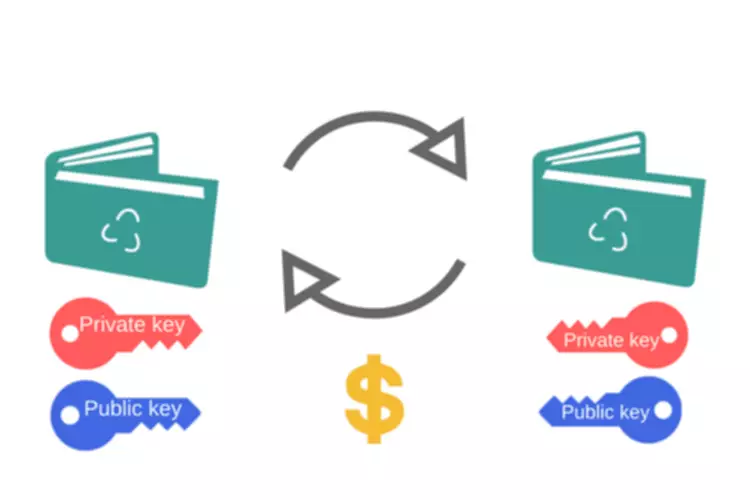
There are many strategies for maximizing earnings from yield farming. The most important one is to be early at providing liquidity in vaults and continuously monitoring them. Liquidity mining and yield farming are different on numerous platforms regarding the mining process and reward calculations. All things considered, Liquidity Mining is still a better option than just HODLing and hoping that your crypto assets increase in value so you can sell them for profit once they do. Because with Liquidity Mining, the potential returns are high and are almost guaranteed – which, in many ways, negate the risks involved.
Benefits Of Liquidity Mining
Liquidity mining is one of the more common ways of yield farming where investors can earn a steady stream of passive income. In this guide, we will discuss what it is, including the risks and benefits to investors engaging in the practice. Not only that, but we also highlight some of the best liquidity mining platforms for anyone looking to make use of their packed crypto. Yield farming is a broad categorization for all methods used by investors to earn passive income for lending out their cryptocurrencies. They can receive interest, a portion of fees accrued on the platform they are lending their tokens or new tokens issued by these platforms.
Instead of keeping your crypto assets in storage where they don’t earn you any money, liquidity mining makes it possible to earn passive income on your existing assets. There are several decentralized exchanges that incentivize liquidity providers to participate within their platforms. The most popular are UniSwap and Balancer, which support Ethereum and Ether-related tokens on the ERC-20 standard.
Liquidity Mining Is Dead. What Comes Next? – CoinDesk
Liquidity Mining Is Dead. What Comes Next?.
Posted: Wed, 19 Jan 2022 08:00:00 GMT [source]
” the answer is that it’s a beneficial network participation strategy which gives you the opportunity to place some of your assets into liquidity pools available on decentralized exchanges. By lending assets to these liquidity pools, you can earn such rewards as trading fees and governance tokens. This article goes into detail about liquidity mining, including its many benefits and the few risks that might occur when investing. The participants place their assets in the liquidity pools which are generally available on decentralized finance protocols. The provided assets improve the liquidity of the pools and facilitate more transactions in the liquidity pools. In turn, the liquidity miners can earn many benefits like rewards, high yields, governance tokens, native tokens, and so on.
The Oecd Presents The G20 With A New Crypto Transparency Framework
Cases have already happened where a user opened his wallet and found out that all his tokens had disappeared. In fact, smart contracts can withdraw funds even ten years later, when you will hold thousands of dollars or even more in your wallet. And the users themselves give them such rights, so when investing, always read the agreement carefully. UniSwap is arguably the largest decentralized crypto exchange with a current trading volume of more than $800 Billion. The platform supports Ethereum and ERC-20 tokens (only Ethereum-hosted assets). The most recent incident that is experienced within the DeFi space is the Compounder Finance rug pull that saw investors lose close to $12.5 million.
A DEX is a blockchain-based marketplace where peer-to-peer crypto transactions take place without the need for an intermediary. By doing so, Liquidity Miners are compensated with fees and Liquidity Mining rewards based on their share of the total pool liquidity. While liquidity mining results in an investor earning native tokens, the investments that occur with yield farming will result in the investor earning interest. The individuals who provide liquidity also tend to use the protocol and hold tokens well after they’ve invested their cryptocurrency assets.
For whichever DeFi platform you are considering, check its history for security hacks. Ensure that the platform regularly undertakes a third-party independent security audit. Finally, consider the age of the platform and the identity of the core developers. There are various ways of paying out liquidity mining rewards, the most popular one is the auto-compounding method where the rewards from every transaction fee are compounded to your wallet address.
New Free Dao Nfd Token Crashes By 99%
Because of this, hackers can detect backdoors and simply withdraw all the funds at once. Of course, large AMMs like Uniswap or Maker are unlikely to do such a thing, but fresher and more inconspicuous ones may, which already happened with Cyberchain. Therefore, avoid dubious projects and treat risks consciously, especially if the smart contract has not been audited. Also, read the agreement carefully – there may be a clause on withdrawal of funds, or you might find some other shaky points. Information asymmetry – the biggest challenge for investors within decentralized networks with open protocols such as DeFi marketplaces is that information is not fairly distributed to the public. Information asymmetry breeds community ills such as mistrust, corruption and lack of integrity.
They can stake their holdings and receive earnings from traders. You should be careful about choosing the best mining platform and also monitoring your holdings on vaults. Liquidity mining can become the first choice of investment for many people. It helps the DeFi platforms offer more features to end-users, and it’s why they always try to keep the miners. Blockchain has acted as a boon for the digital economy through the introduction of cryptocurrencies. Decentralized finance has emerged as a perfect solution to this problem.
Liquidy miners and yield farmers provide ETH or any ERC-20 token to the platform and receive trading fees. Besides, the COMP token is distributed between liquidity miners that incentivize them more. COMP is the Compound platform’s governing token and has experienced a rise in price in the past months. Investing in cryptocurrencies and earning rewards from various resources isn’t a new concept. In the past decades, many crypto-enthusiasts have joined this movement.